Brand architecture
Overview
New York City government is home to hundreds of unique brand identities. Some are well-known and beloved by New Yorkers. Others contribute to the feeling that government is a confusing “alphabet soup.”
Though there have been attempts over the years to standardize city branding, there is still very little consistency across government. This inconsistency can be problematic, especially on digital channels.
Consistent branding enables easy digital wayfinding. It helps users understand where they are and how to navigate to other parts of the digital network. For this reason, we will detail clear and consistent guidelines for implementing branding on digital properties.
Primary brand
The initials “NYC” and the NYC logo make up the primary brand of the NYC digital network. The presence of this logo tells the user:
- They are looking at an official NYC government digital property
- The digital property is trustworthy and contains official information
The NYC logo is the primary brand across digital channels, regardless of agency or product. The official logo is the first item users encounter in the navigation. It helps establish trust and orient users to the way the site is structured.
Primary brand in navigation
Desktop

Mobile

nyc.gov is the primary brand on the web
On the web, the NYC logo is synonymous with nyc.gov. When the logo appears in navigation, users must understand that clicking this logo will take them to the nyc.gov homepage. Furthermore, information that appears alongside or in the same area as this logo are understood to be global — that is, related to the website as a whole rather than a specific organization or product.
Secondary brands
The NYC digital network consists of a single primary brand (NYC) and hundreds of secondary brands (agencies, applications, initiatives, etc.). While the primary brand tells the user that they are on an official and trustworthy government experience, the secondary brand reinforces this trustworthiness and tells them precisely which part of the government they’re interacting with.
To create consistent guidelines for the many different naming conventions and logos used by city government organizations, we will separate these brands into their discrete elements. Then we will apply a formula to understand which elements should appear in which places on a website.
| Brand element | Definition | Example 1 | Example 2 | Example 3 | Example 4 |
|---|---|---|---|---|---|
| Official brand name | The name of the organization or product as it appears in legal documents | New York City Department of Sanitation | New York City Department of Buildings | New York City Department of Transportation | Notify NYC |
| Simplified brand name | The shortened name used to refer to the organization or product in public communications | Sanitation | NYC Buildings | ||
| Brand abbreviation | The acronym or initialism used to refer to the organization or product. | DSNY | DOB | NYC DOT | |
| Emblem | A branded visual element including graphic mark(s), icon(s), or other design motifs consisting of an illustrative form or symbol. Emblems may also contain words or letters, but are primarily image-based. |  |  | ||
| Logotype | A typographic logo that depicts letters and/or words of an official brand name, abbreviation, or simplified name |  |  |  |  |
| Hybrid logo | A standardized combination of any of the above elements |  |
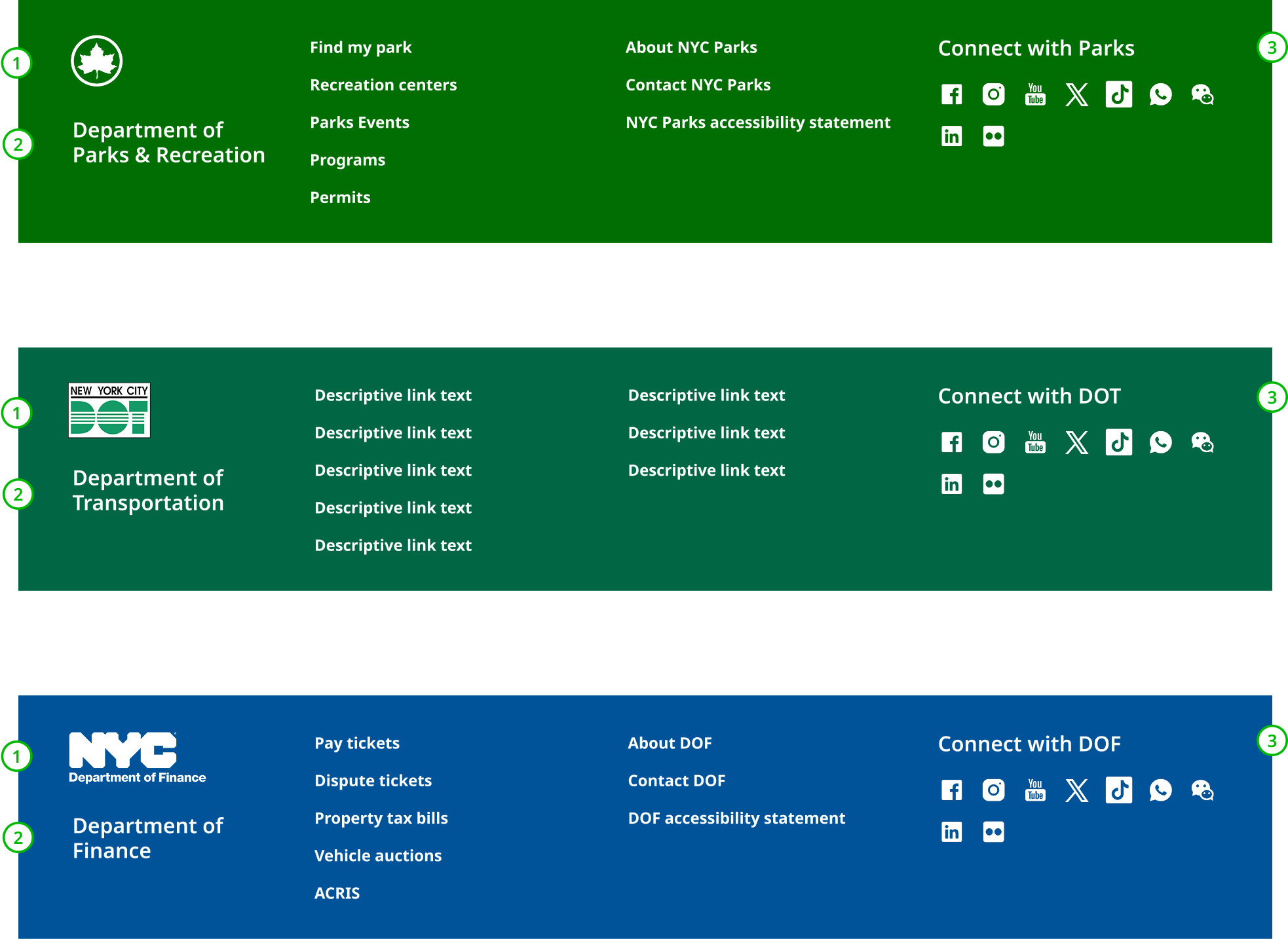
Secondary brands in website headers
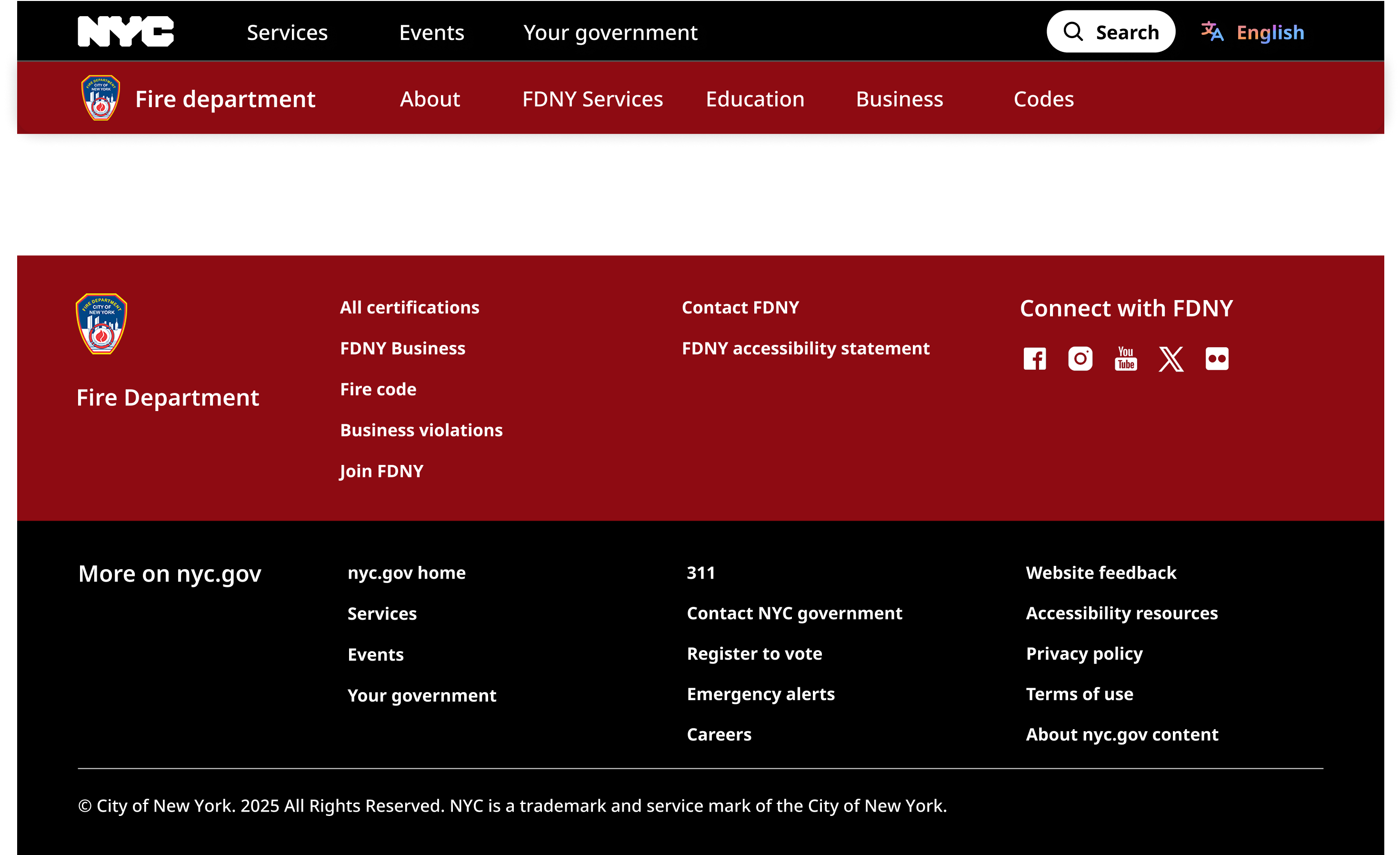
In the website header, the user will encounter both the primary brand (NYC) and the secondary brand (agency, application, initiative). Differentiating these two brands is important because it will enable the user to distinguish global website elements from local website elements.
Do
Follow this formula for implementing the secondary brand in the desktop website header:
- Primary brand (NYC logo)
- Emblem. If no official brand emblem exists, omit number 2.
- The simplified OR the official name of the secondary brand, excluding “New York City” or “NYC,” in live text.* Use the most clear name variation (official or simplified) for users to understand what the site is about and which part of the government they are interacting with.
Don't
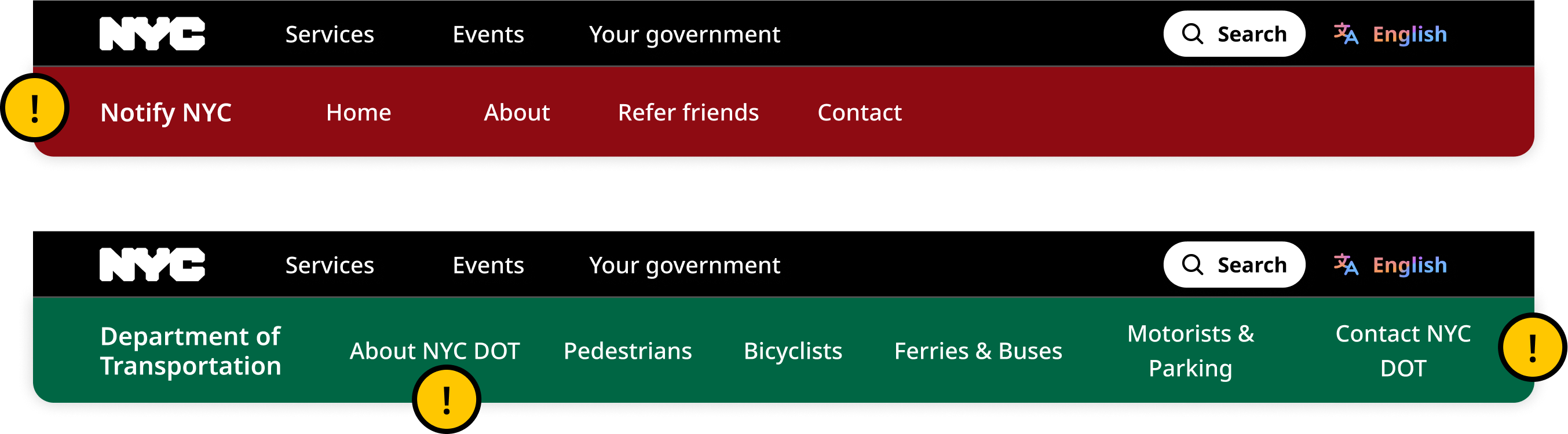
- Never include an image logotype in the header. Live text makes the site accessible for New Yorkers using translation tools or screen readers.
- Do not repeat ‘NYC’ in brand name.*
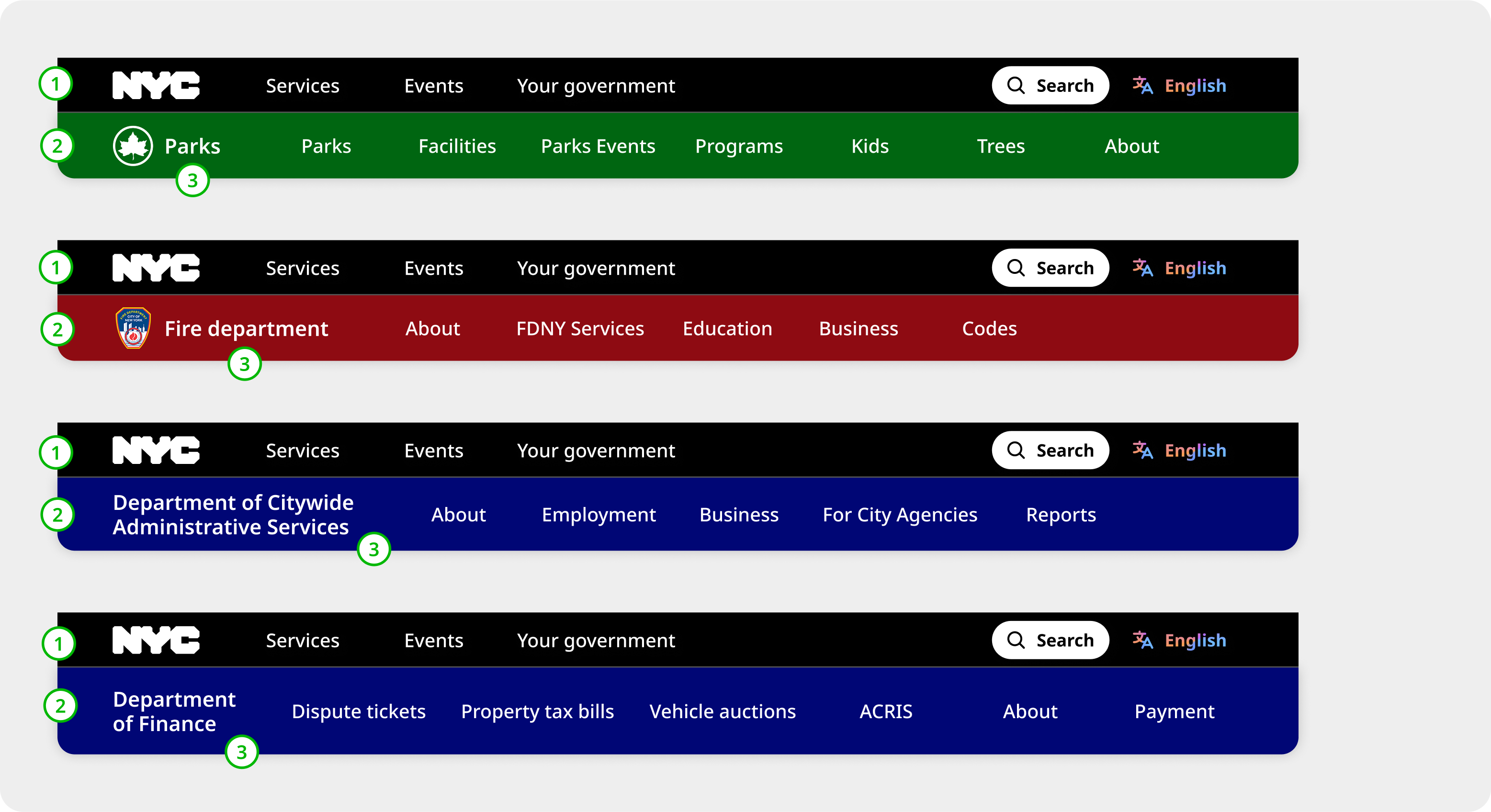
*No repetition of NYC
Because the secondary brand always accompanies the primary brand in the header, including “New York City” or “NYC” in the secondary brand is redundant and potentially confusing. Omit “New York City” or “NYC” in the header except in rare cases where the brand name does not make sense without it, such as “Notify NYC.”
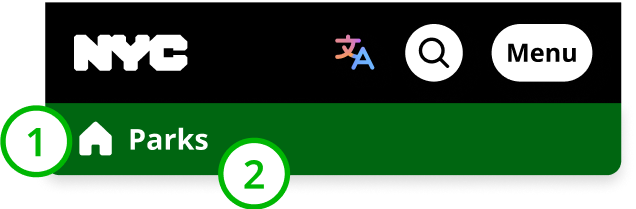
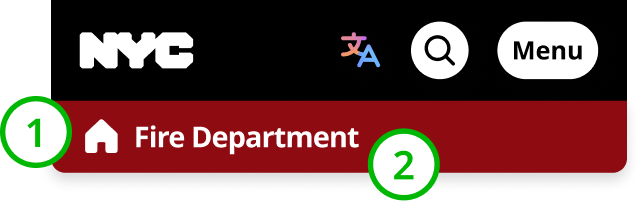
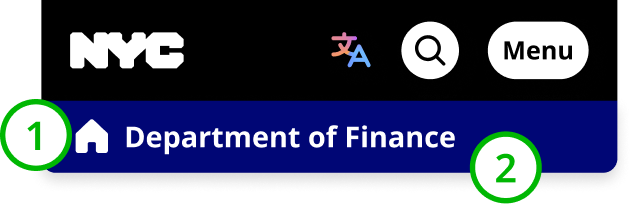
Mobile headers
Follow this formula for implementing the secondary brand in the mobile website header:
- Home icon
- The simplified OR the official name of the secondary brand, excluding “New York City” or “NYC,” in bold live text.* Use the most clear name variation (official or simplified) for users to understand what the site is about and which part of the government they are interacting with.